


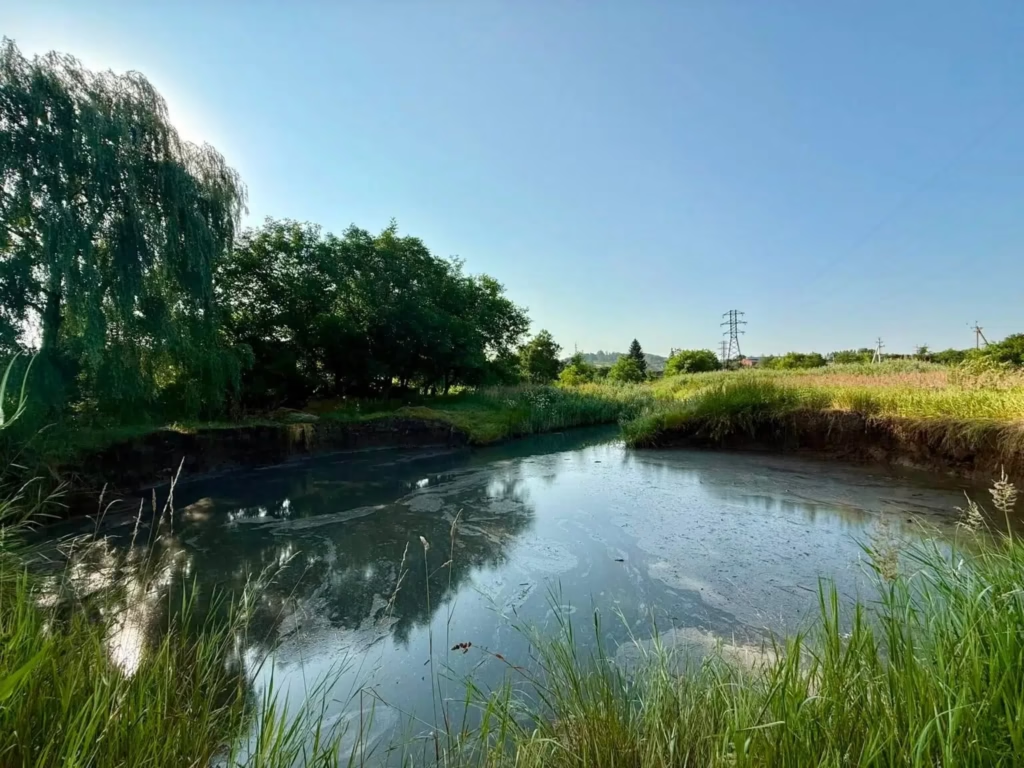
 A sinkhole in the Sivka River channel on Yuliia Hanushchak Street in Kalush continues to expand. The sinkhole, designated No. 4d, first formed on 11 February 2025.
At the time, the sinkhole measured approximately 7 metres in diameter. By the end of February, it had expanded to around 10 metres and remained relatively stable for several months.
A new phase of sinkhole activity began on the evening of 15 July 2026. Residents of the surrounding area reported hearing a loud ground collapse and alerted the emergency services. By 17 July, the sinkhole had expanded to approximately 25 metres in diameter. This marked the second major phase of expansion of the same sinkhole within eighteen months.
In May 2026, the Kalush City Council commissioned the preparation of design and cost-estimation documentation for the sinkhole remediation project. On 1 July, the Executive Committee of the Kalush City Council approved the project with an estimated budget of UAH 977,439.
However, following the rapid expansion of the sinkhole, the original cost estimate was no longer considered adequate. According to the local news outlet Pravda IF, during the Kalush City Council session on 31 July, Yurii Tokaruk, Head of the Department of Construction and Infrastructure Development, stated that conditions at the site had changed significantly. As a result, the remediation project, prepared in May and approved on 1 July, no longer reflects the current scale of the sinkhole.
Specialists are currently considering several options for the next phase of remediation. These include temporarily diverting the river flow, altering the Sivka River channel to facilitate earthworks, or creating a permanent water body at the sinkhole site. The final decision will depend on the results of additional geophysical and hydrogeological investigations.
The centre of the subsidence is located directly within the Sivka River channel. Despite the significant expansion of the sinkhole, the river has not yet disappeared into the underground mine voids.
According to the specialists' preliminary assessment, this may be because the old underground mine workings are already filled with water. However, the exact configuration of the underground mine voids, the extent of their inundation, and the potential direction of further ground subsidence will need to be determined through additional investigations.
The nearest residential building is located approximately 50 metres from the sinkhole. According to preliminary assessments, there is currently no immediate threat to residential properties. However, several outbuildings are located closer to the sinkhole and may be at an increased level of risk.
A 6 kV overhead power line supplying a wastewater pumping station also runs near the sinkhole. If necessary, the line can be de-energised and the facility switched to a backup power supply. Information on the proximity of residential properties and nearby infrastructure was reported by the local news outletGalka».
According to the latest observations, the sinkhole is expanding primarily westward toward an old mining drift. An underground salt mine working is located approximately 15 metres from the current edge of the subsidence.
Additional investigations will be carried out by researchers from the Ivano-Frankivsk National Technical University of Oil and Gas. The findings are expected to help determine the likely direction of further sinkhole development, assess potential risks to nearby structures, and identify the safest approach to remediation works.
Researchers from the Ivano-Frankivsk National Technical University of Oil and Gas are also monitoring ground subsidence and groundwater conditions in the technogenically transformed areas of the Kalush community. Their work includes precise geodetic levelling, laser scanning of affected sites, and groundwater sampling to determine the degree of mineralisation. Further information on these investigations has been published by the local news outlet «Holos-Info».
Because the sinkhole formed directly within the Sivka River channel, future engineering interventions may affect the river flow, bank stability, and the interaction between surface water and groundwater. For this reason, decisions on the remediation or stabilisation of the sinkhole should be based on the results of geophysical, hydrogeological, hydrological, and environmental monitoring.
Our Home – Manyava believes that the consolidated findings of these investigations should be made available to the public in a form that enables communities to understand the evolving situation and its potential risks, while ensuring that no information is disclosed that could compromise national security, public safety, or environmental security.
Related Posts
No responses yet